46 Watkin Street NEWTOWN NSW
On 9 March 1915, Joseph Alexander Miller and Ann Elizabeth Chalker purchased 46 Watkin Street, Newtown.
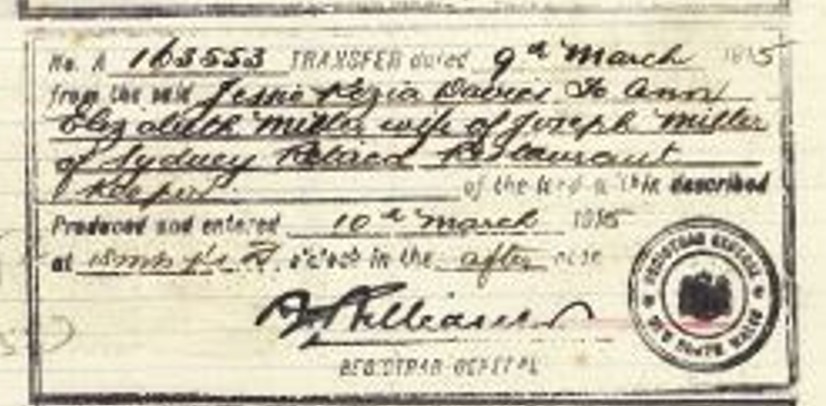
It was the first house they owned that became unmistakably their family home.
For more than twenty years prior, their lives had been marked by movement — Gordon Lane, Little Palmer Street, Crown Street, George Street, Pitt Street, Regent Street. Some addresses were residences. Some were restaurants. Some were boarding houses. Often they were both at once. The family expanded in rented terraces above shopfronts and behind commercial premises.
Watkin Street was different.
By March 1915, Joseph was sixty-one and Ann Elizabeth forty-six. Their eldest daughter, Josephine — born in 1894 at 19 Gordon Lane, Paddington — was approaching her twenty-first birthday. Charles Hampden, nineteen, was in Perth working as a steward before later enlisting. Margaret was sixteen. Patrick eleven. Joseph ten. Harry eight. Doris five. Alma three. Albert just twenty-two months old.
The Great War had begun the previous year. Sydney’s eastern and inner suburbs were dense with industry, tramlines, and working families. Newtown was solidly working class — terraces pressed shoulder to shoulder, iron lace balconies, narrow rear yards, brick chimneys marking each household. The railway line and the tram corridors linked the suburb directly to the city. It was a district of labourers, tradesmen, dock workers, shopkeepers, and families who measured prosperity not by grandeur but by ownership.
For Joseph and Ann Elizabeth, after decades of rental addresses and commercial premises, ownership signified arrival.
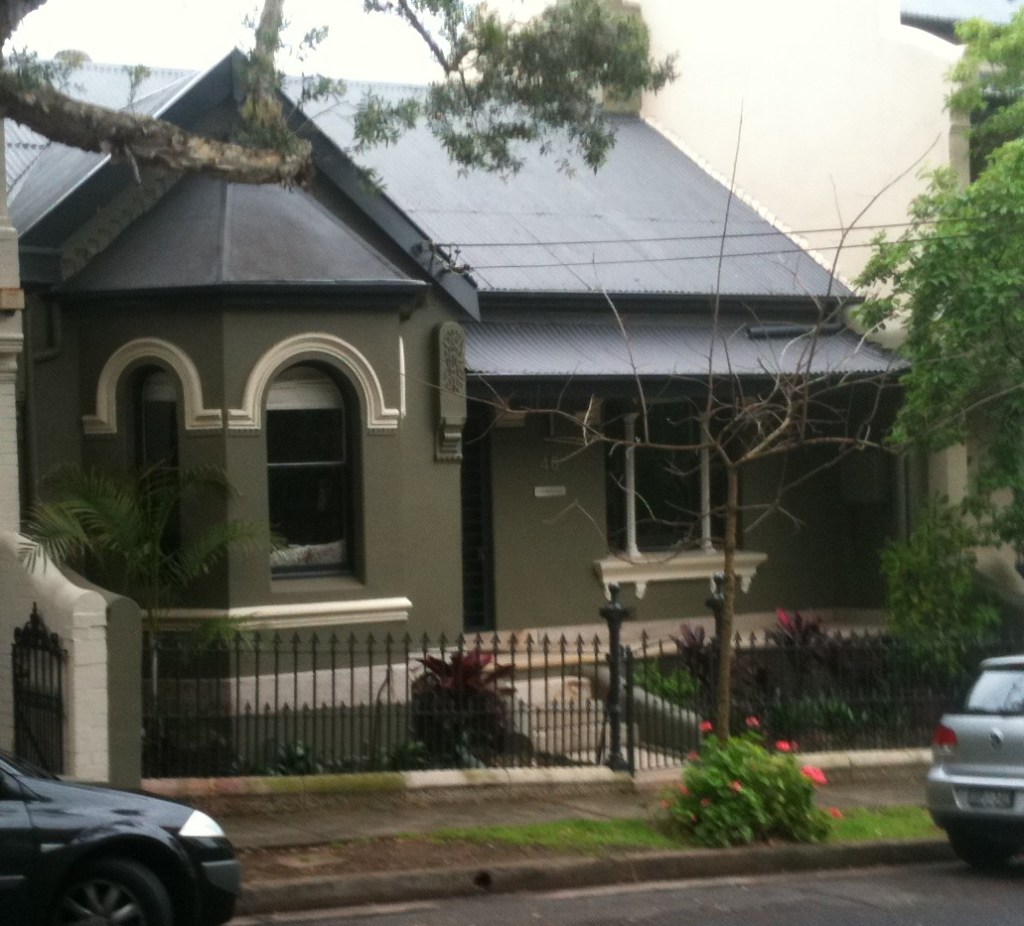
The house still stands today in near-pristine condition. Its proportions remain modest — a late nineteenth-century terrace, practical rather than ornate — but solid. In 2025, when photographed, it remains recognisable as the same structure they purchased in 1915, the same brick walls that witnessed the closing decades of their lives.
Yet even as Watkin Street became their base, it did not signal retreat from enterprise.
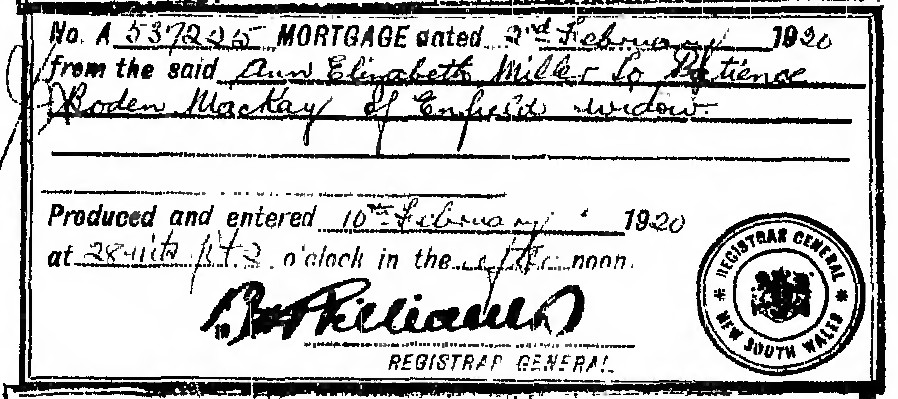
On 2 February 1920, Ann Elizabeth took out a mortgage on the family home. The timing is not incidental. That same period coincides with the establishment of a boarding house at 23 Stanley Street and the purchase of 54 Arthur Street and 11 Phelps Street in Surry Hills — their first clear investment properties beyond residence. The mortgage suggests capital was being leveraged, not squandered. The family home became security for expansion.
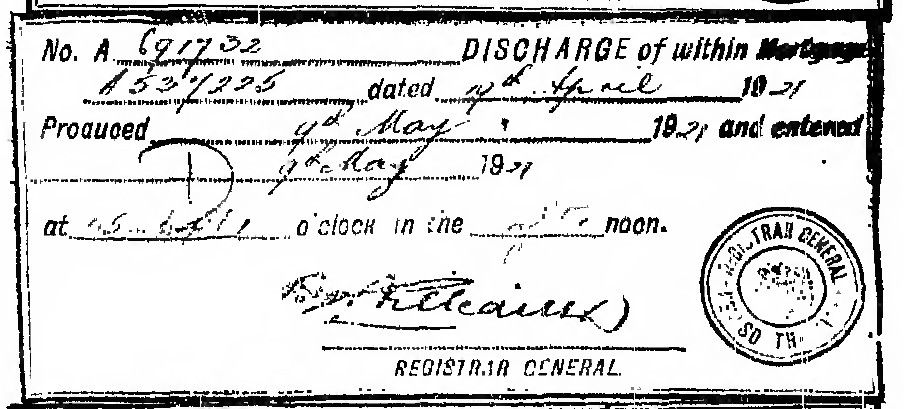
On 19 April 1921, that loan was discharged.
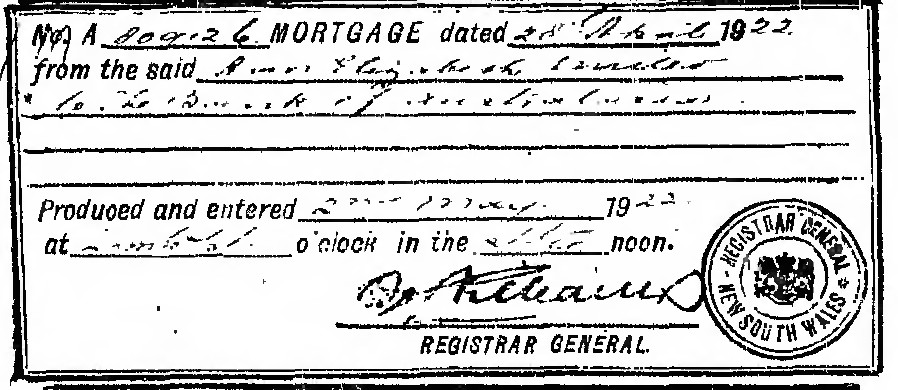
Twelve months later, on 28 April 1922, Ann Elizabeth took out another mortgage, again aligned with continued property investment. This was not a family withdrawing from risk. It was a household still building.
The electoral roll of 1936 shows Alma, aged twenty-five, and Albert, twenty-three, living at 46 Watkin Street with Joseph and Ann Elizabeth. Albert’s wife, Freda — married two years — was also resident. By then the children were adults, yet the house continued to function as a generational anchor.
Joseph Alexander Miller died on 15 October 1939.
The house at Watkin Street had been his fixed address for twenty-four years.
In 1941, Alma married at the age of thirty and moved out. The household contracted again.
On 3 October 1943, Ann Elizabeth died.
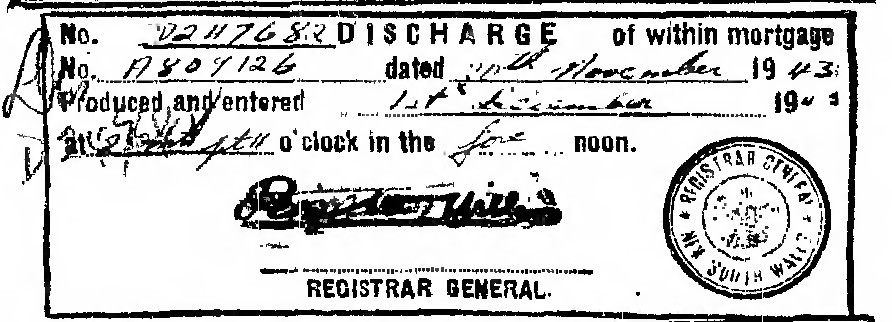
Eight weeks later, on 20 November 1943, the mortgage was finally discharged once more. Whether coincidental or procedural, the timing suggests financial matters were being settled in the immediate aftermath of her death.
The electoral rolls show that Albert and his wife Freda continued living at 46 Watkin Street after Ann Elizabeth’s passing, remaining there at least until 1962. The house did not empty. It remained within reach of the family.
Yet what followed complicates the assumption of seamless inheritance.
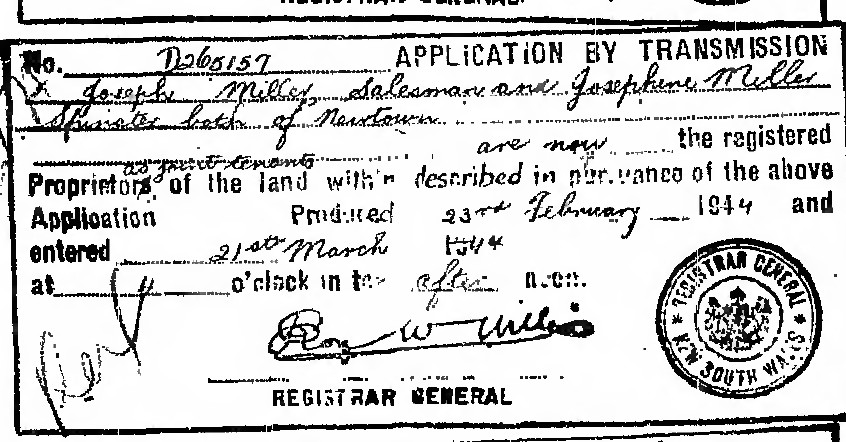
On 23 February 1944, an application for transfer of 46 Watkin Street was lodged. It would be reasonable to presume that the property was intended to pass jointly to Joseph and Josephine, the eldest son and eldest daughter.
But on that same day, a caveat was lodged against the property.
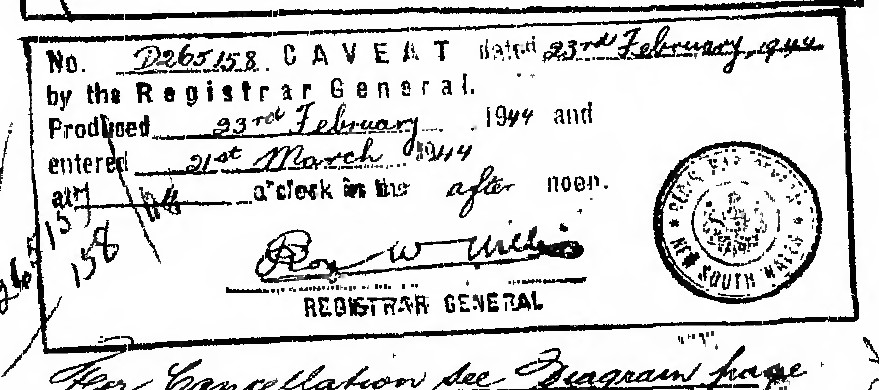
A caveat indicates dispute. It suggests that someone — most likely Josephine — contested the will or the distribution of the estate.
For nearly two years, the matter remained unresolved.
Finally, on 1 March 1946, the issue was settled. There was only one recorded owner:
Josephine Miller, eldest daughter of Joseph Alexander Miller and Ann Elizabeth Chalker.
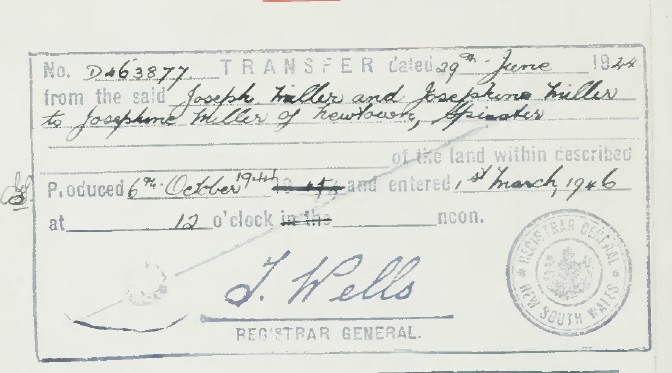
The house that had been purchased in 1915, mortgaged and re-mortgaged to fund enterprise, lived in by successive children, and held through the deaths of both parents, now belonged solely to Josephine.
Josephine’s own life had been intertwined with family property for years. In the early 1930s she and her long-time partner, William Joseph Naughton, were living at 23 Stanley Street — the boarding house her father had operated for thirteen years. Later electoral rolls show them renting at 160 Palmer Street, Darlinghurst. William worked as a dock labourer — a connection, perhaps, to the maritime world that had once shaped her father.
They eventually moved to Melbourne. Josephine married William in Victoria in 1959. They were living at 14 Park Street, South Yarra — a unit rather than a terrace — until Josephine’s death on 19 January 1970.
Eighteen months later, on 2 June 1971, 46 Watkin Street was transferred into William Naughton’s name.
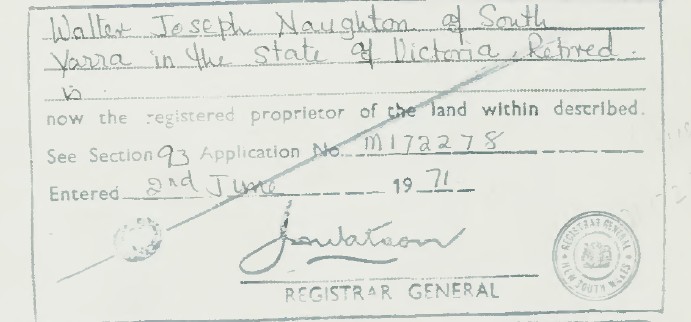
By the end of July 1971, he had sold it.
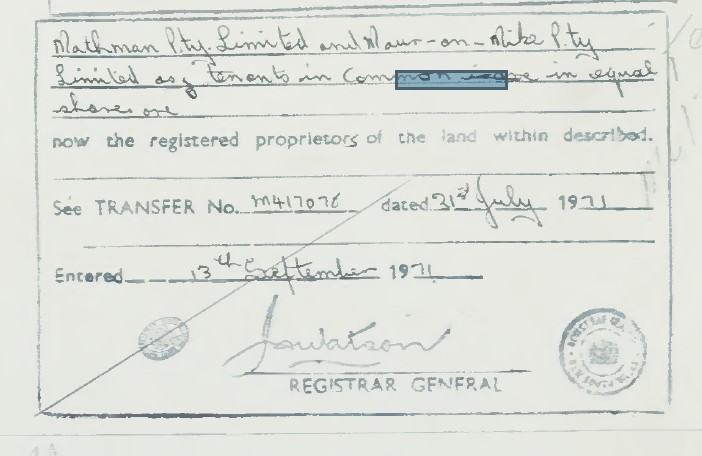
The house passed out of the Miller line.
For nearly three decades, Joseph and Ann Elizabeth had moved from address to address — boarding houses, restaurants, terraces above shopfronts, streets that marked stages of enterprise and survival. Watkin Street was different. It was purchased when their children were still young. It saw sons enlist and daughters marry. It stood through the Great War, the Depression, and the Second World War. It housed three generations under one roof.
It was trusted within the family.
That it eventually left the line may not have been what Joseph and Ann Elizabeth imagined in 1915. But for twenty-eight years, it was the place where their family gathered at night, returned from work, argued, planned, mourned, and grew older.
More than any other address, 46 Watkin Street was not merely a location in a directory.
It was a home.
 Joseph Alexander Miller 1854-1939