JA & AE’s first 3 children were born at 3 different addresses. Josephine (1894) at 19 Gordon Lane, Paddington (1894-1895). Charles (1896) at 17 Little Palmer St, Darlinghurst (1896-1897) and Margaret (1898) at 143 Crown St, Darlinghurst (1898-1901) the first records of them running a restaurant and rooms to rent was in 1901 at 601 George St, Haymarket (1901-1906). This was the birthplace of Patrick (1903) and Joseph (1905) and also was their family home. It is named in numerous directories as “Miller Mrs J Restaurant”. When in 1901 JA’s first wife found him, in court she testified, that she had noticed a sign over the door saying “Mrs Miller”.
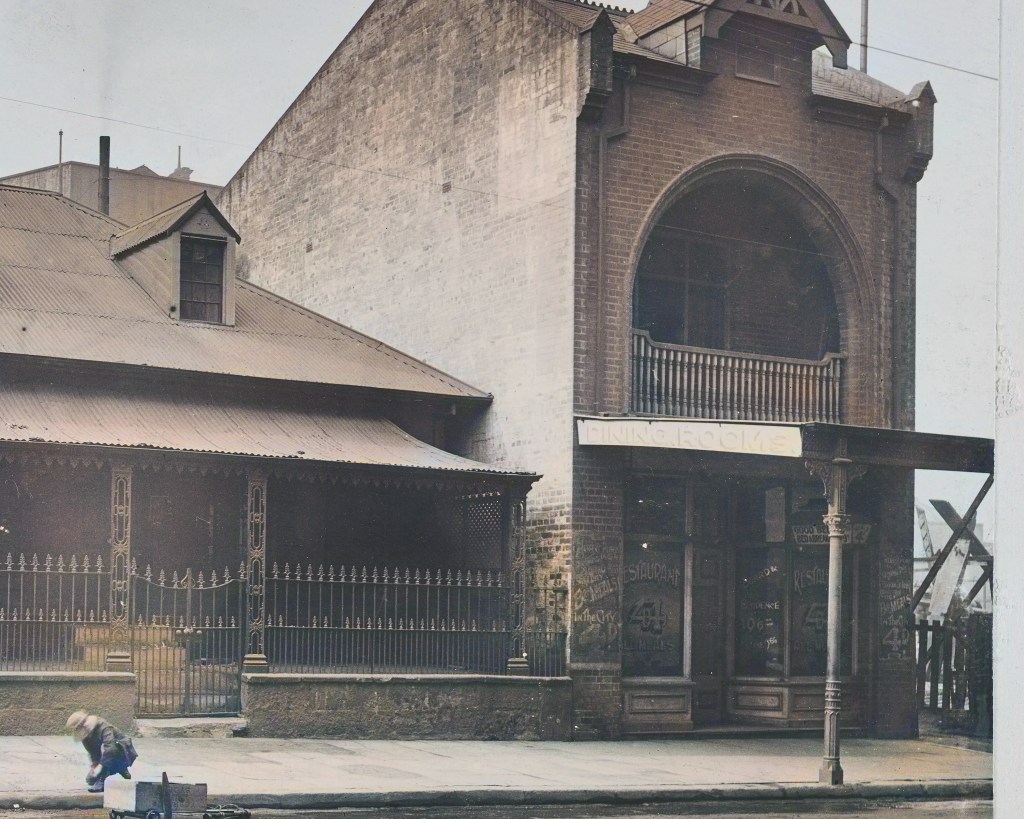
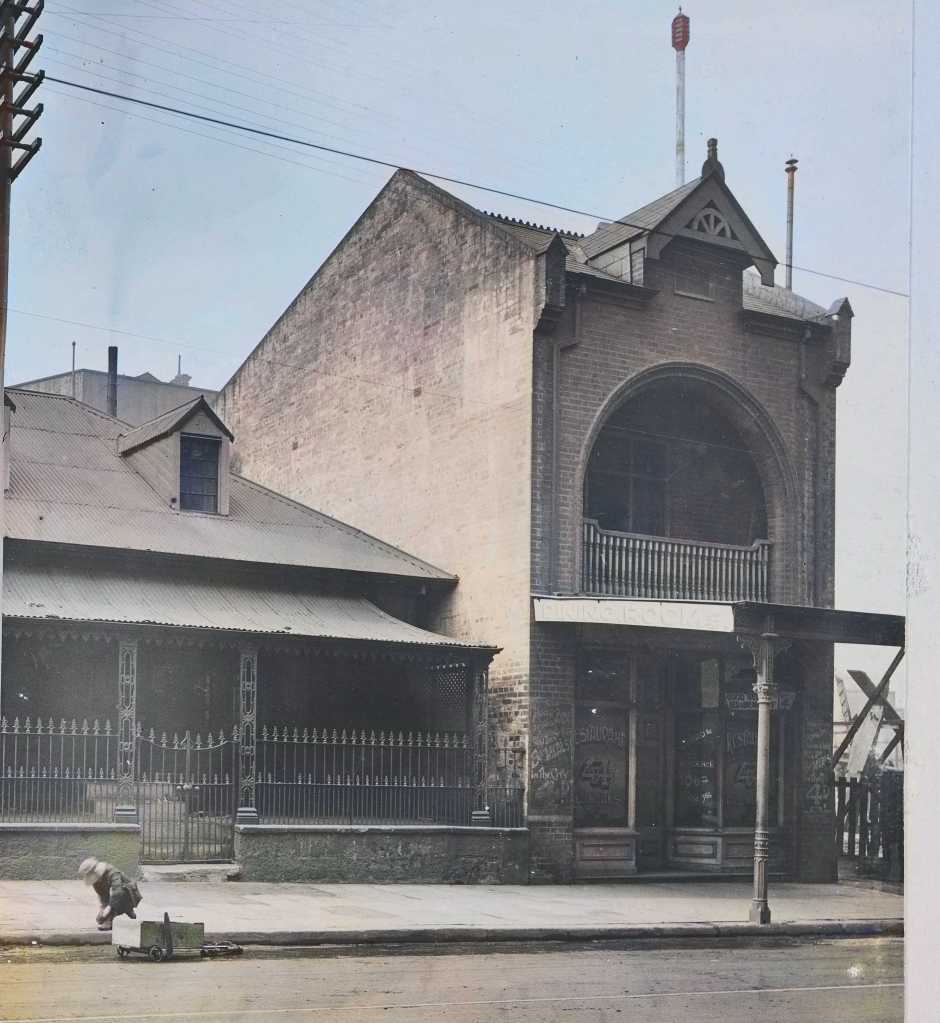
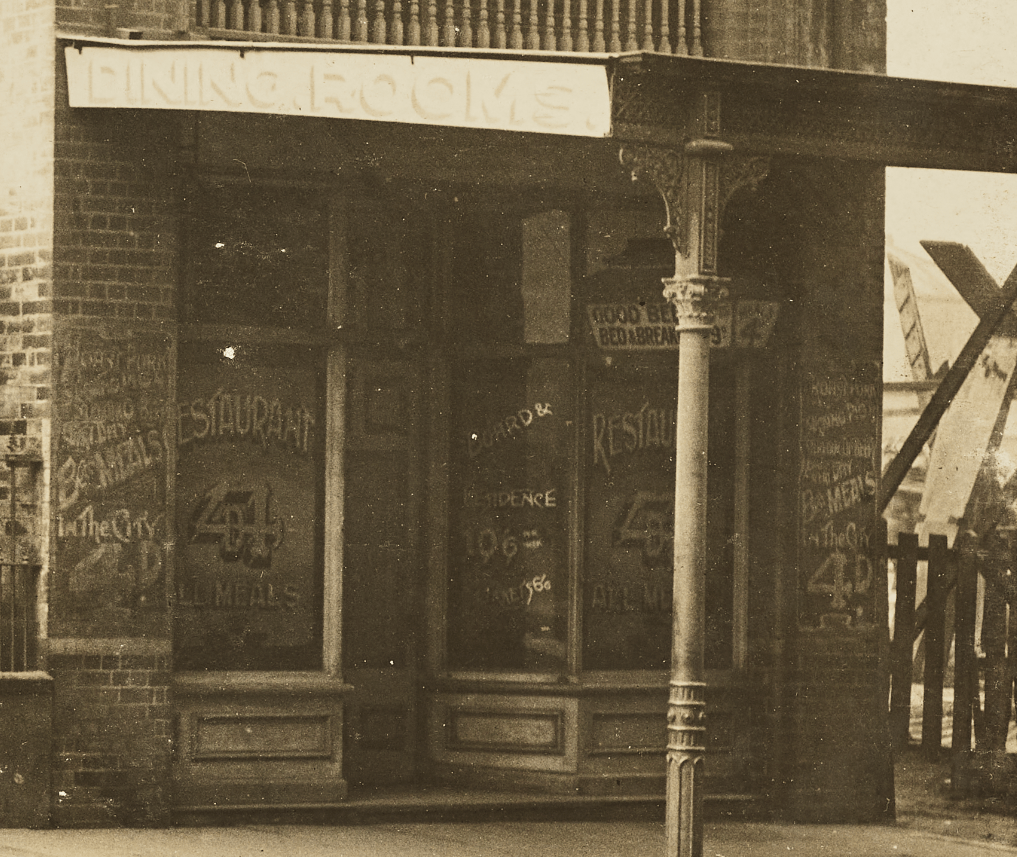
The first premises which was not the family home, pictured above, was at 374 Pitt St in Sydney CBD from 1905-1911 and served as a restaurant offering rooms for rent at 10/6 per week. 10/6 represented 10 shillings and 6 pence which equates to $1.20 but with inflation it works out to $96 per week in 2025. Also, you could get a blanket for 6 pence extra which was 5 cents which equates in $4.50 now. This was also in the Sands directory as “Miller Joseph Restaurant”.
All of JA’s restaurants were advertised as a “4d restaurant”(4 pence) where you can get a meal for approx. 4 cents which compares to $3 now. The meal advertised on the chalkboard was “Roast pork sucking pig” and is written as “Best meals in the city”.
In 1907 they took on 32 Regent St Chippendale
Boarding Houses & Businesses
Kitchens, Lodgers, and Long Hours
The addresses recorded in directories and electoral rolls tell us where Joseph Alexander Miller and Ann Elizabeth Chalker lived. They do not immediately reveal how they lived.
In late nineteenth and early twentieth-century Sydney, small restaurants and boarding houses were often indistinguishable from family homes. A narrow terrace might contain a kitchen serving meals to labourers, a front room operating as a dining space, and upstairs rooms let weekly to lodgers. Work and domestic life existed under the same roof.
By the early 1900s, Joseph had shifted from maritime employment to land-based enterprise. Listings at George Street, Pitt Street, Regent Street, Castlereagh Street, and Goulburn Street show a consistent pattern: restaurant keeper, boarding house proprietor, tenant of mixed commercial premises.
These were not grand establishments. They were working businesses in working districts — near docks, markets, and transport routes. Meals were inexpensive. Accommodation was practical rather than comfortable. Profit margins were narrow and dependent on constant labour.
The directories sometimes list “Mrs Miller – Restaurant,” suggesting that Ann Elizabeth’s name may have appeared publicly on certain registrations. Whether for convenience, legal necessity, or commercial strategy, it reflects the overlapping personal and legal complexities of their situation during the years when Joseph remained legally married to Mary Ann Rayner.
Behind each listing was routine:
Early markets.
Long hours at the stove.
Accounts to balance.
Tenants to manage.
Children growing up in the rooms above or behind the business.
These enterprises provided not wealth, but continuity. They funded rent, raised children, and eventually supported the purchase of property.
What follows is a closer examination of each known business address, drawn from Sands Directories, rate notices, court records, and electoral rolls — tracing how these modest establishments formed the economic backbone of the Miller family.
 Joseph Alexander Miller 1854-1939