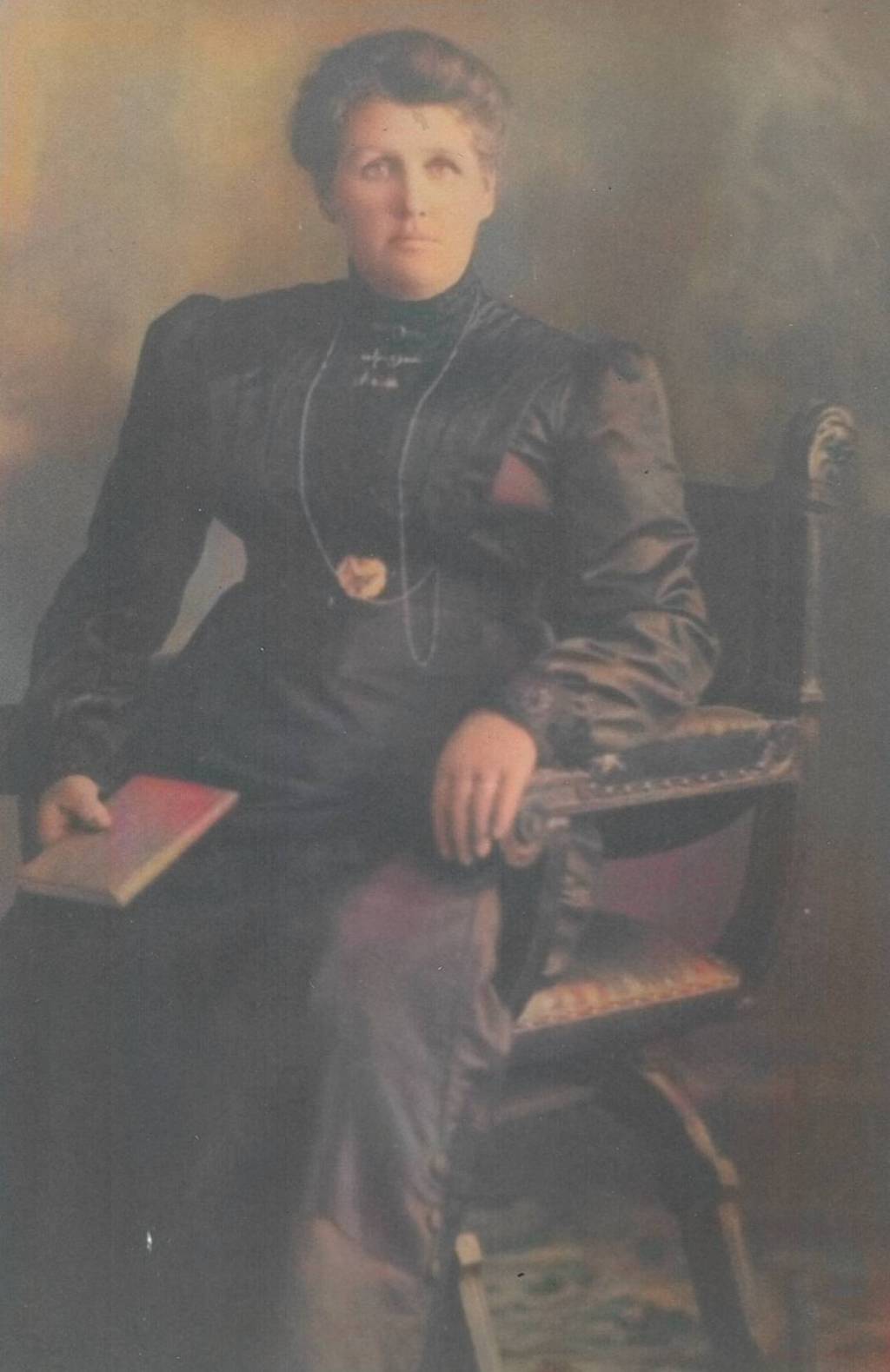
The Charker–Chalker Line: Two English Lives, One Colonial Beginning
The Chalker name in Australia did not arrive as a neat family line with a single beginning. It arrived through two separate English lives — one beginning in relative stability, the other in hardship — and it took its Australian shape through transportation, assignment, and household circumstance rather than formal marriage.
Long before spelling was standardised, surnames were written as clerks heard them. In English parish registers and early documents, the name appears in shifting forms — Charker, Chawker, and later Chalker — sometimes within the same family line. The instability of spelling matters, because it becomes part of the record from the very beginning of the Australian branch.
By the eighteenth century, the family is anchored in Hampshire. Edward Charker, born in 1718 (Aylesbury, Hampshire), married Elizabeth Barr (born 1737). From this union came the son who becomes pivotal in the colonial record: William, born in 1774 at Winchester, Hampshire.
William was not born into poverty. His father’s trade as a tallow chandler placed the family within a skilled and established working world. In eighteenth-century England, a tallow chandler was more than a simple candle maker. He worked with rendered animal fat — most commonly from cattle or sheep — which was boiled, clarified, and poured into moulds to form candles. Before the widespread availability of gas lighting, and long before electricity, such candles were essential to daily life. They illuminated homes, workshops, inns, churches, and streets. Tallow candles were the ordinary light of the working and middle classes.
There was, however, a distinction within the trade. Candles made from beeswax — cleaner burning, longer lasting, and far less odorous — were considerably more expensive and often reserved for churches, wealthier households, and formal settings. Tallow, by contrast, was practical and widely used. The chandler’s skill lay not only in moulding candles, but in sourcing fat, rendering it properly, maintaining quality, and managing supply in a market where light was not a luxury but a necessity.
The occupation required technical knowledge, physical labour, and commercial acumen. It was part manufacturing, part trade. A successful chandler occupied a stable position within town life, connected to farmers, butchers, merchants, and customers alike. The work was indispensable in a world governed by daylight and flame.
They were not outsiders to English society. And yet, in 1800, William’s life turned in a direction that would carry the surname across an ocean.
In December 1800, William became involved — with an accomplice — in a substantial burglary at St Mary Lambeth, stealing goods valued at 33 pounds & 6 shillings. It was a serious offence, technically a capital crime in law, and he was arrested and tried at the Surrey Assizes on 25 March 1801. At trial he was recorded as William Charker, alias William Chalker. He was found guilty and sentenced to be transported beyond the seas for seven years — severe, but a comparatively lenient sentence given that burglary of that value could attract the death penalty and the harsh sentencing of the period.
After trial he was confined on a prison hulk at Deptford, one of the floating prisons used to hold convicts awaiting removal. From there he was transported aboard the Coromandel, which sailed from Spithead on 12 February 1802 carrying convicts and free settlers, arriving in Sydney on 13 June 1802.
From this point onward, the spelling of his name remains fluid. In legal and official correspondence, Charker continues to appear. In everyday colonial usage, Chalker becomes common.
Once in the colony, William was assigned as a farm labourer to Jonas Archer and Mary Kearns in the Hawkesbury district. In 1803, after Archer fled to avoid creditors, Mary became sole owner of the farm and soon afterwards married William. The property became known locally as “Chalker’s Farm.”
In March 1806, prosperity in the Hawkesbury was shattered by a devastating flood that destroyed crops and stock. During the flood, William attempted to rescue neighbours using a small boat. When it overturned, the adults drowned, but William swam ashore with a small child clinging to his back. For this act of bravery he was granted a Conditional Pardon in August 1806.
Not long after, the marriage broke down. A legal separation was announced in the Sydney Gazette in July 1807, and William left the property, reportedly taking only his horse.
His sentence expired, and on 7 April 1808 he received an Absolute Pardon, freeing him to return to England if he wished. He chose instead to remain. He entered the employ of Gregory Blaxland as Farm Overseer at Brush Farm and South Creek, and later worked for William Lawson, serving as overseer until 1814.
Land followed. Although granted 30 acres at Cook’s River in 1808 (which he did not take up), he later received 60 acres at South Creek in 1812, purchased an additional 50 acres, and received a further 125-acre grant. He became a substantial landholder and cattle producer, supplying meat to Government Stores. His appointments show how far he had travelled from convict status: Principal Overseer of Government Stock at the Cow Pastures in 1816 (with £50 per annum plus provisions), Chief Constable in 1817 (with £20 per annum), and Pound Keeper in 1820.
In April 1820, he accompanied Surveyor James Meehan on an exploration of the Wollondilly River district. Though he deemed it unsuitable for government grazing, he secured permission to graze his own stock there and established a hut and stockyards at Mittagong. After his death, a further 200-acre grant at Mittagong — which William had requested — was issued to Elizabeth.
By late 1822, William’s health declined sharply. He described himself as suffering from severe indisposition arising from the performance of his public duties. He resigned his posts and requested that he and his family be victualled from Government Stores in recognition of his service. The request was granted.
On 30 January 1823, William made his will. He died three days later, in February 1823, aged 48, and was buried at St John’s Cemetery, Parramatta — where his headstone still stands. Significantly, the record carries both of his names at once: his will reads Charker, while his headstone reads Chalker.
But William’s story is only half of the beginning.
Elizabeth Sheckle’s journey begins in a very different England. She was born in 1782 in North Perrott, Somerset, the eldest of eight known children of Joseph Sheckle, an unemployed labourer, and his wife Elizabeth. Her early life appears marked by poverty rather than prosperity.
In February 1800 she gave birth to a son, Robert, father unknown. Shortly afterwards she walked to Bridport, Dorset, where she obtained work as a twine spinner — one of the few employments available to women of limited means. The fate of her first child is unknown.
On 9 February 1806 she gave birth to a second son, Daniel, in Bridport. With little income and a child to support, she turned to theft. On 29 October 1806 she was arrested for stealing muslin and calico from the Bridport drapery shop of Edwin Wagstaff. She was held in Dorchester Gaol and tried at the Dorset Assizes on 12 March 1807. She was convicted of Grand Larceny and sentenced to be transported beyond the seas for seven years.
She returned to gaol to await removal. Seven months later she and her young son Daniel were taken to Portsmouth. On 16 February 1808, they were placed aboard the convict ship Speke, one of 97 female prisoners bound for Port Jackson. The Speke joined a fleet at Falmouth and departed on 18 May 1808, arriving in Sydney on 16 November 1808 after a voyage of 185 days.
Female convict ships were often overcrowded. Conditions were cramped, sanitation poor, and disease common, though you have noted that the mortality rate on the Speke was lower than on many earlier transports.
Upon arrival, the women were immediately placed in boats and taken upriver to the Female Factory at Parramatta, the colony’s principal institution for female convicts. It functioned as both punishment and system: a prison, a labour depot, and the place from which women were assigned into households — sometimes informally acting as a marriage bureau and placement registry.
Within days of her arrival, Elizabeth was selected by William Charker (Coromandel, 1802) and assigned to him as his “hut keeper.” They did not legally marry. But from that moment, their lives became joined in practice, and the family that followed carried the name Chalker.
Although no formal marriage took place, Elizabeth assumed the name and role of Mrs Chalker — William’s commonly used alias — and Daniel, her son from England, also assumed the surname Chalker from that time. This is the crucial point where the Australian line becomes something different from the English record. In the colony, the name Chalker is carried forward through household belonging and legal recognition, not formal marriage.
Their first child together, Edward, was born on 10 September 1809 at South Creek, where William was employed as Farm Overseer to Gregory Blaxland. Other children followed: William James (1810), Maria (1811), Joseph Henry (1813), John (1815), James (1817), Mary Ann (1818), and George (1821). A later child, Frederick, was born after William’s death yet was known as Chalker. In one account, Frederick was baptised on 27 October 1825 as Frederick Chalker, with Edward McCabe acknowledged as the father.
Edward and his older half-brother Daniel — Elizabeth’s son from England — later achieved colonial notoriety as bare-knuckle fighters, a reminder of the physical and competitive world these children grew up within.
When William died in February 1823, Elizabeth was left to raise a large and young family alone. But William had become a substantial landholder, and his will ensured that she retained control of the estate during her lifetime, with the estate to be divided among her children afterward. He left his possessions to “my friend and companion, Elizabeth Sheckle during her lifetime, and then to be divided equally among her children.” Importantly, this included Daniel.
Biologically, Daniel was not William’s child. Legally and socially, he was included as one.
After William’s death, Elizabeth received the additional 200 acres at Mittagong which William had requested before he died. In August 1823, Edward McCabe — who had been working for William and replaced him after his retirement — sought and was granted permission to marry Elizabeth, but the marriage did not take place. She retained control of the estate in her own right.
Elizabeth died without a will at South Creek on 1 October 1842, aged 60, and was buried at St John’s Cemetery, Parramatta alongside William, where her headstone records her name as Elizabeth Sheekle. Under the provisions of William’s earlier will, all of her nine recognised children received substantial bequests of land. One account notes that this did not include Frederick.
And in that final detail, the colonial family reality becomes unmistakable: inheritance and belonging in early New South Wales were shaped by recognition, household structure, and legal instruments, not only by blood.
From that point, the documented line to Ann Elizabeth Chalker runs through Daniel — Elizabeth’s son from England — the child who arrived with her in 1808 and took the name Chalker when his mother became Mrs Chalker in practice. Daniel married Jane Welsh, born in 1818, and their son Daniel E. Chalker was born in 1836. Daniel E. married Anne Kelly, born in 1845, and from that union came Ann Elizabeth Chalker, born in 1868.
Thus the line unfolds: Elizabeth Sheckle (1782–1842), Daniel (born 1806, later Daniel Chalker), Daniel E. Chalker (born 1836), and Ann Elizabeth Chalker (born 1868).
By the time Ann Elizabeth was born, the Chalker surname had been established in the colony for more than half a century. The origin story of that surname — Charker and Chalker, alias and phonetic drift, transportation and reinvention — was no longer visible in everyday life. The descendants were simply Chalkers, born into a name already reshaped by colonial history.
And it was Ann Elizabeth — carrying that surname and that layered inheritance — who would later form her partnership with Joseph Alexander Miller, and become the mother of their nine children.
Before that partnership began, however, Ann Elizabeth’s own life entered the record in a different kind of book — not a parish register, not a land grant, but the institutional pages of a Sydney charity.
By 1890, Ann Elizabeth’s name appears not in the distant records of South Creek and Parramatta, but in the careful handwriting of a Sydney institution — marking a brief, deeply personal chapter that preceded everything that came after.
Ann Elizabeth Chalker and the birth of Lindsay Crawford Chalker (1890-1891)
Ann Elizabeth Chalker’s name first enters the Sydney record in a context far removed from the life she would later build with Joseph Alexander Miller.
Before their long partnership, she lived through a brief but deeply significant chapter in 1890–1891 — one preserved almost entirely through institutional handwriting, registry entries, and the formal language of charitable record-keeping.
On 1 April 1890, Ann Elizabeth Chalker was admitted to the Benevolent Society in Sydney. She was twenty-three years old, and she was recorded as single. The admission register notes that she was pregnant by James Pannell, a painter, whose whereabouts were unknown. It also records a decision that would shape everything that followed: Ann Elizabeth refused to take proceedings against the putative father — meaning she declined to initiate legal action to seek maintenance.
In late nineteenth-century New South Wales, unmarried pregnancy carried heavy stigma, and charitable institutions such as the Benevolent Society often became the only structured support available. These institutions commonly encouraged women to pursue fathers for financial assistance, and refusal was noted carefully. Whether Ann Elizabeth’s decision reflected the practical difficulty of locating an itinerant tradesman, a belief that proceedings would be futile, or a choice shaped by personal circumstance, the record does not say. It simply preserves what she chose to do.
The following day, 2 April 1890, Ann Elizabeth gave birth at the Benevolent Asylum. In the Society’s journal, her son was recorded as Lindsay Crawford. The middle name matters. “Crawford” remains the one stable thread through later documents, even when the given name changes.
On 7 May 1890, the journal records her discharge. The infant was five weeks old. Mother and child were discharged together, and they were released to Ann Elizabeth’s sister, Helen Chalker, at Castlereagh Street, Sydney. Once again, the register notes her refusal to take proceedings against the father. Whatever else the documents cannot tell, they do suggest this much: Ann Elizabeth had family support in Sydney, and she did not immediately relinquish her child to institutional care.
Civil registration confirms the child’s birth at the Benevolent Asylum and names Ann Elizabeth Chalker as the mother. Yet by the time of the child’s death, he was registered under a different given name: Sidney Crawford Chalker, described as illegitimate. The discrepancy between “Lindsay” in the Benevolent Society journal and “Sidney” on the death registration may reflect a later change of name, a clerical variation, or the name supplied by a caregiver. The documentary record does not clarify it. What it does preserve consistently is the middle name: Crawford.
On 30 January 1891, the child died, aged ten months. The death registration records his place of birth as the Benevolent Asylum, Sydney, with Ann Elizabeth Chalker named as mother and no father recorded. The informant was T. S. Wilson, described as the adopted father, residing at Macdonaldtown (now Erskineville). The cause of death was given as enteritis and exhaustion, and the burial place recorded as the Presbyterian Cemetery, Rookwood.
Macdonaldtown was infamous for its dark history associated with horrific crimes of notorious serial killer couple Sarah and John Makin. They were known as “baby farmers” fostering unwanted children for money and then killing them to make room. Their actions led to media frenzy and a high-profile trail resulting in a tragic outcome for the victims and the couple. The scandal ultimately forced town planners to merge Macdonaldtown into Erskineville leading to its disappearance from the map. Today the only remnants of Macdonaldtown are the train station and a few plaques.
The term “adopted father” must be read in the context of the time. Formal legal adoption did not exist in New South Wales until 1923. Infants were frequently boarded out privately or placed with foster families, often in exchange for payment, and such arrangements were sometimes described in loose and practical language rather than legal terms. Macdonald Town in the early 1890s was a working-class district where boarding and fostering were common, and infant mortality — particularly from gastrointestinal illnesses such as enteritis — was tragically high. The child did not reach his first birthday.
This episode sits before everything that later defines Ann Elizabeth in the family record: before Joseph Alexander Miller, before the nine children, before decades of shared addresses and business life. It is, however, part of her documented history — an early chapter marked by institutional scrutiny, reliance on family, and loss.
Like many women of her time, her experience survives not in letters or diary pages, but in the careful handwriting of official books. The record is sparse. The impact would not have been.
 Joseph Alexander Miller 1854-1939